
The Talon
Vol. 1 | Ed. 17
The White House Media Ban: Censorship in a “Free Society”
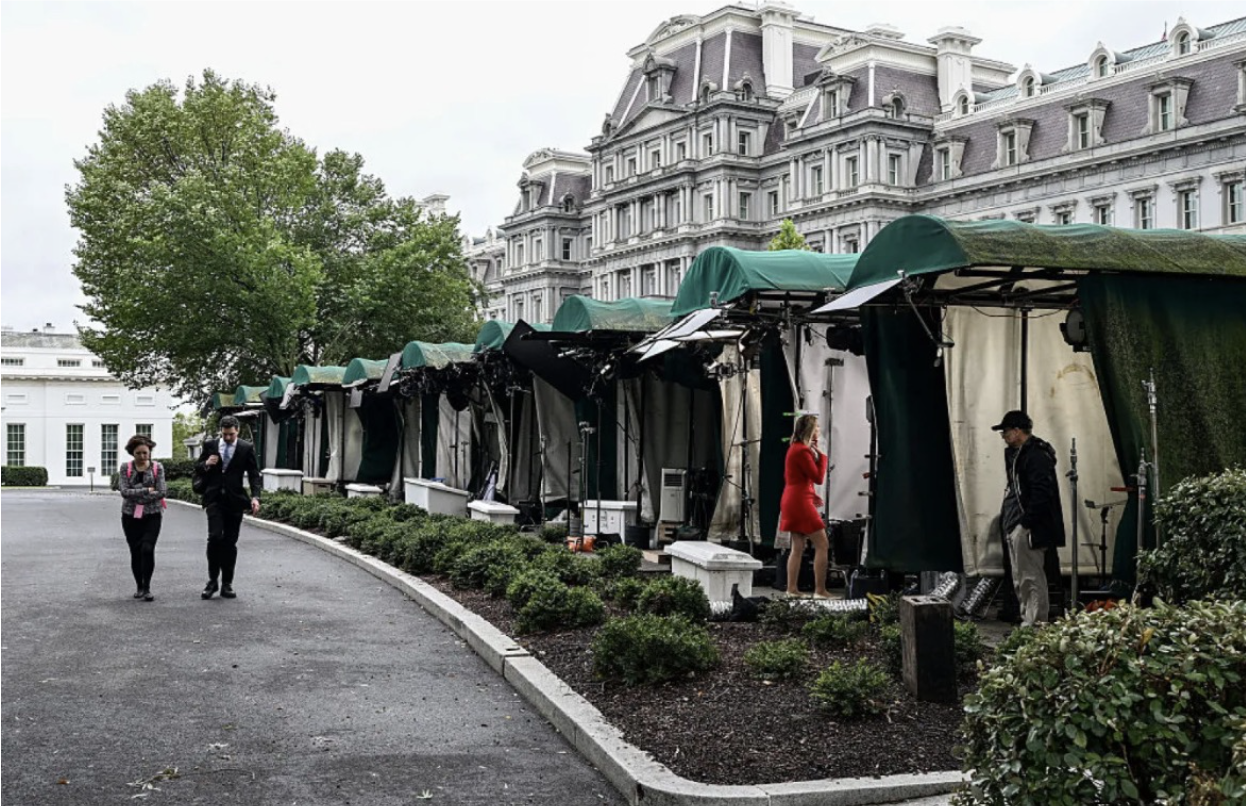
In a truly democratic society, a free press serves as an indispensable watchdog. Its core duty is to hold elected officials accountable and protect the unhindered flow of information to the public. Recently, however, a serious constitutional crisis has emerged at the highest levels of the United States government, threatening the foundational pillars of American democracy. The administration under President Donald Trump enacted a sweeping ban that stripped over eighty journalists from major news networks—including CNN, MS NOW, and Politico—of their White House press credentials and access to daily briefings. This aggressive, retaliatory action stands as a direct violation of both the freedom of the press and the broader right to free speech.
Freedom of the press is not a luxury or a privilege to be rationed by those in power; it is an inalienable right essential to an informed electorate. By deliberately targeting and shutting out specific media organizations simply due to a personal distaste for their critical reporting, the executive branch engaged in blatant, unlawful viewpoint discrimination. Routinely labeling fact-based investigative journalism as "fiction" or "fake news" sends a chilling message to the entire media landscape: fall in line with official government narratives, or face professional exile.
Furthermore, this confrontation demonstrates how deeply press freedom is intertwined with individual liberty. When the government punishes independent organizations for broadcasting perspectives it deems unfavorable, it severely diminishes the public’s right to transparent governance. If a sitting president can unilaterally choose which reporters are allowed to ask questions based entirely on how flattering their coverage is, the press ceases to be independent. It risks morphing into an apparatus for state-sponsored messaging. This dynamic sets a dangerous precedent, weakening the constitutional checks and balances engineered to prevent authoritarian overreach. By choking off adversarial reporting, the administration directly erodes the civil liberties of everyday citizens who rely on independent journalism to make informed democratic choices. When press freedoms are compromised, the structural integrity of free expression for all Americans begins to fracture at its core.
Fortunately, the American legal system has pushed back against this overreach. In a significant victory for journalistic independence, U.S. District Judge Timothy Kelly issued a preliminary injunction that indefinitely restored White House access to the banned news organizations while the respective lawsuits move forward. In his written decision, Judge Kelly explicitly observed that the administration likely overstepped the law, concluding that the president's own public remarks made it clear the ban was an attempt to coerce more favorable coverage rather than a legitimate response to national security concerns.
Though the Department of Justice has already filed an appeal to reverse the ruling, the court's intervention stands as a vital reminder that the Constitution explicitly guards independent journalism from government censorship. The ongoing legal battle underscores that safeguarding a free press is a continuous struggle. To preserve a functional democracy, journalists must retain the absolute right to investigate, question, and report the truth without fear of executive retribution. This judicial precedent strongly reinforces that the executive branch cannot weaponize credentialing systems to bypass constitutional boundaries. Ultimately, protecting a free press ensures the truth remains accessible to everyone, keeping the American experiment grounded in liberty rather than government-mandated narratives.